Entering the Art World: A Guide for Artists, Buyers and Collectors06/10/2026Author: Nima Behnam
Part II In Blog Part I, Who Gives Contemporary Art Its Value? Gatekeepers, Legitimacy, and Relevance 21/05/2026, we explored the structure of the contemporary art world. Here in Part II we ask a more practical question: what does that structure mean for artists and collectors trying to move within it? The 2004 Arts Council England report suggests that one of the ultimate aspirations for artists and their intermediaries is to place work in a public collection, while collectors often seek to acquire works they believe to be of museum quality. In that sense, the imagined path to success runs from World A through World Ω. It is a simplified model, but a useful one. Once an artist enters a museum collection, many more doors will open. Likewise, collectors who own works by institutionally recognised artists gain cultural prestige as well as market confidence. The socio-economics of sphere Ω put the emerging artists in a fairly challenging position. It helps explain why some artists are hesitant to sell too broadly or too quickly, or to exhibit in certain local galleries. They hope their work will one day be legitimised by the gatekeepers and positioned within a more enduring institutional narrative. Experience has shown that a few will succeed, Many succeed only partially, and many others eventually step away from the art world altogether with disappointment, taking jobs in other sectors while maintaining their practice on the margins or abandoning it entirely. So what does this mean in practice for artists and collectors? For artists, the first step is clarity. It is important to understand what kind of commercial life you want for your practice. Do you want to remain in Sphere A, building a sustainable local or independent career? Or do you want to pursue entry into Sphere Ω, with all the competition, uncertainty, and prestige? Neither path is inherently superior, but each requires different strategies. Those ambitious artists who want to pursue their career to sphere Ω, should also work to understand the value of their work, not only financially but contextually. They should try to position their practice as clearly as possible within the art historical narrative, stay informed about developments in the art world, and build meaningful networks, especially in major art centres where possible. If access to those centres is limited, pursue other avenues: building communities with like-minded artists, and leveraging online platforms to create visibility and momentum. Make your voice be heard. Though majority of the institutions are placed in art capitals, yet, proximity alone is not enough. A 2018 study published in Science by Magnus Resch and his co-authors showed that artistic success depends less on simple ‘physical’ closeness to major art capitals than on closeness to the institutions most central to the art world network. For emerging artists, this means that building the right connections may matter more than being in New York, London, or Paris, especially early on, when visibility and reputation are still taking shape. Moreover, online channels such as a professional website and social media are extremely useful channels through which you can contexualise yourself. Don’t underestimate the power of these channels. Collectors and buyers, on the other hand, should begin by being honest about their intentions. Are they buying for love, for intellectual engagement, for social meaning, or for long-term cultural relevance? One cannot collect a local artist and expect financial gain the next year. Collectors should trust their own taste, while also taking time to understand the artist’s practice and place within the broader art world. Buying art can feel emotionally satisfying and financially uncomfortable, but that discomfort is often part of the seriousness of the decision. For those with disposable income, there is real value in listening to artists, learning about their work, and supporting practices that resonate. If a work aligns with your intentions, there should be no hesitation in acquiring it. If you decide wisely, and the artist has the quality that you believe they have, they would almost certainly enter the world Ω sooner or later. Ultimately, the contemporary art world is not governed by talent alone, nor by money alone as some media outlets suggest. It is shaped by networks, narratives, institutions, and systems of validation. For emerging artists, understanding that structure does not guarantee entry into its inner circles, but it does make the path more legible. And sometimes, clarity itself is the first form of power.
References: McAndrew, Clare. The Art Basel and UBS Art Market Report 2026. 2026. Morris Hargreaves McIntyre. Taste Buds: How to Cultivate the Art Market. Executive Summary. Arts Council England, 2004. Fraiberger, Samuel P., Roberta Sinatra, Magnus Resch, Christoph Riedl, and Albert-László Barabási. “Quantifying Reputation and Success in Art.” Science 362, no. 6416 (2018): 825–829.
About the Author
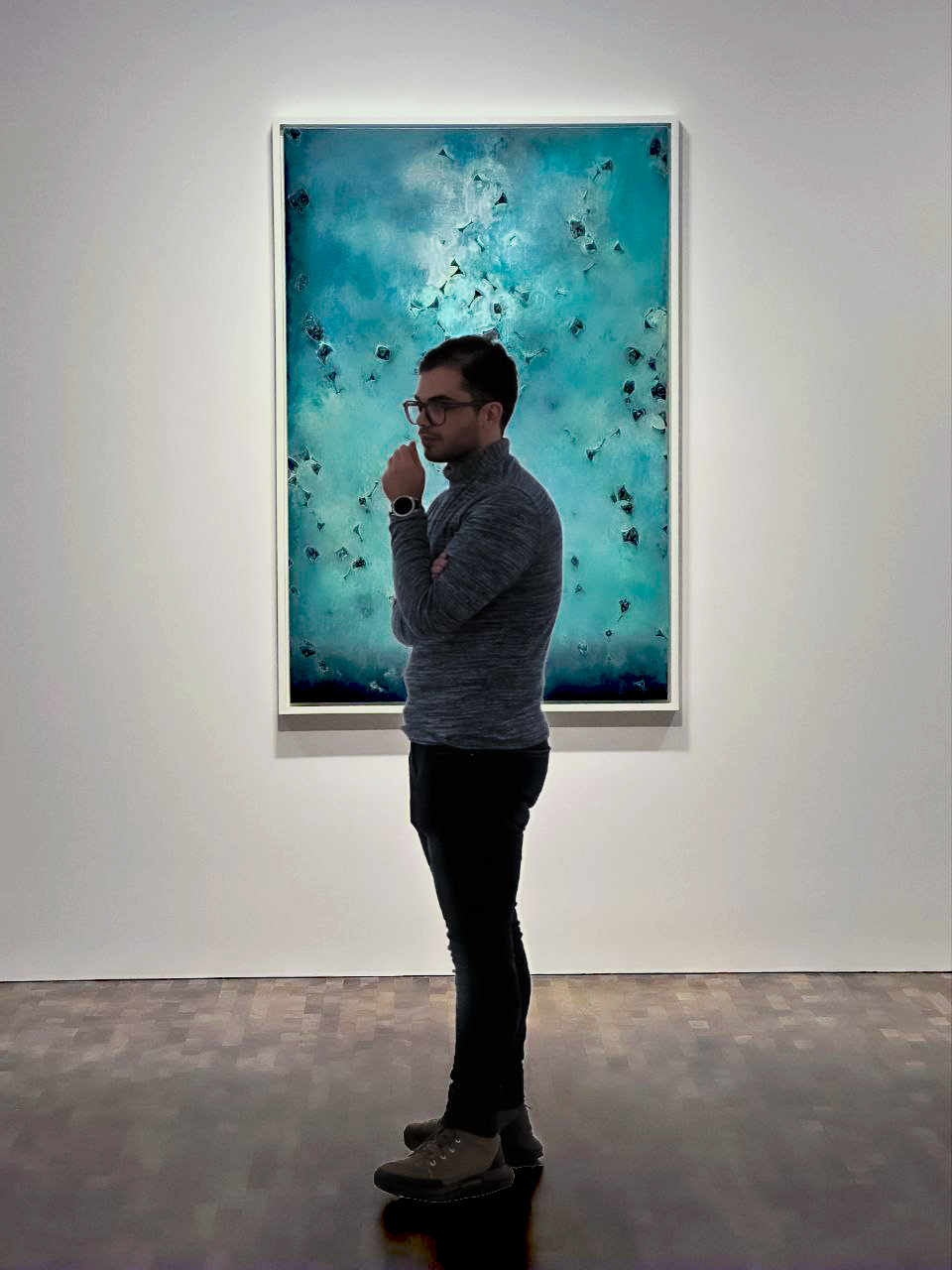
Nima Behnam is a Paris-based art market researcher, curator, and contemporary art professional. His work focuses on the contemporary art market, with a particular interest in market dynamics, collecting, and institutional recognition. Through his combined curatorial and market-focused approach, he offers a perspective on the relationships between artists, collectors, institutions, brands, and the wider art world. |
Comments